In class we were asked to show a rough, edited piece of our horror trailer. We received both positive comments and constructive criticisms. The positive comments we received were that; the foot steps sound, the colour effect we used in the beginning and the blur effect all worked really well in our film. One the other hand, the constructive criticisms were that; there weren't a lot of variety of shot types, we didn't include our title, the colour effect used wasn't consistent and the sounds used weren't consistent.
However, due to changes in our actress and scenes we decided to re-film all scenes with a reliable actress and use the constructive criticisms for improve our opening sequence.
Wednesday, 12 January 2011

Friday, 7 January 2011
Review of a British Film.
Film:
4.3.2.1. is a British crime thriller film directed by Noel Clarke.


Review:
4.3.2.1. is a British crime thriller film directed by Noel Clarke.

Brief:
4.3.2.1. is a British crime thriller set in London and New York, about the lives of four different girls. All are friends who get involved with certain individuals who cause them nothing but drama in a diamond heist. Starring some of the most amazing rising stars including Emma Roberts (Joanne), Tamsin Egerton (Cassandra), Ophelia Lovibond (Shannon) and Shanika Warren-Markland (Kerrys).

Medium close-up of the character - This is used to show the 'anger' and 'serious' emotion on her face but to also show how scared she is the movement of the gun reveals shes shaking as she tried to stand up to a woman looking for the diamonds.

Wide shot of the four main characters - This shot is used as our main characters are walking towards an aiport heading to America.
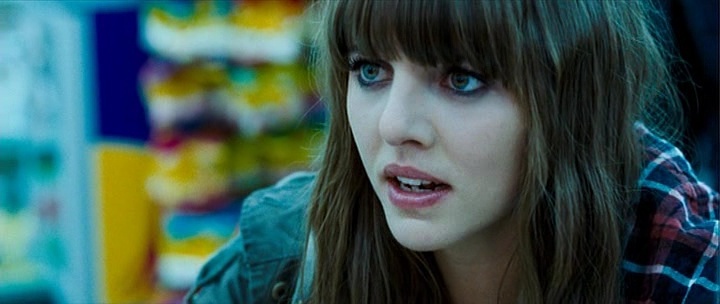
Close-up - This shot is used to show the strong sadden and hurt emotion on the characters face as she sees her friend kissing the boy she likes.

Low angled shot - This is used to show that our four main characters along with an extra has higher status than the one on the floor as they fight off a man.
There are several other types other shots, including shot reverse shot and over the shoulder shot. The characters' clothing are very urban and up to date with today's fashion - their choice ofr clothing also reflects on the economic class. Sound in this film is used to create suspence, reflect on the characters emotions and the scene. Natural lightning is used to help make the film realistic.
Review:
The positive points about this film are that it is different from any other British film in the sense that it is based on the life of four economically different girls in London. For a plot that's short, simple and easy to get bored of; the director makes sure his audience do not get bored easily by deciding to use a different techniques in revealing the story line. Instead of having the plot play out in an obvious way, he decides to go through the events which occur in the four girl's lives by using a technique of 'rewinding' - a technique not used by many directors. Clarke himself appears in a small role as a supermarket employee. Infact, this is the best film by Noel Clarke, as it shows his creative side of directing and is different from his other films which are based on true life events. The only constructive point about this film is the acting wasn't impressive and Adam Deacon plays the obvious 'bad man' in the film. Other than that i would recommend this film as it is interesting and could be seen as a comedy for the younger generation.
Monday, 13 December 2010
Definition of British Films.
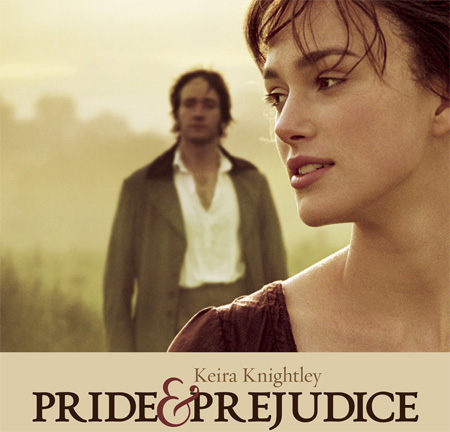


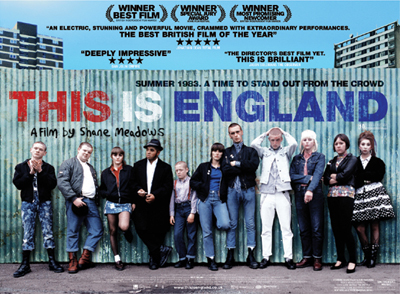
The government announced new rules to clarify what constitutes a 'British' film. Under the current Films Act 1985, movies can be classed as the home-grown product even if they are filmed largely outside the UK, but can be disbarred for not using enough British music.
Now the main qualification for classification as a Brit movie will be spending 70% of a film's budget in the UK and 70% of the film's labour costs on European and Commonwealth citizens.
Announcing the changes, culture secretary Chris Smith said, "The UK film industry has been going from strength to strength in recent years thanks to our wonderful array of acting and technical talent. We want to make it even more attractive to film in Britain, and our economy will undoubtedly benefit as a result."
Smith plans to put his words into action: the government has pledged to invest over £150 million into the British film industry (now estimated to be worth over £900 million per annum) over the next three years. What's more, tax breaks introduced in 1997 help producers and buyers write off production costs.
Since 1997 almost 200 films have been classed as British. Fewer than 20 British films per year were made between 1993-96.
Friday, 10 December 2010
Researching Organisations.

Britfilms.com if for access to the UK film scene and is publish by the Film Team at the British Council. The British Council is UK;s international organisation for education opportunities and cultural relations. Their purpose is to build a bond and trust for the UK through the exchange of knowledge and ideas between people worldwide. The Film Team is part of the British Council Arts Groups. The role of the arts group is to work with the best of British creative talent to develop innovative, high-quality events and collaborations that link thousands of artists and cultural institutions around the world, drawing them into a closer relationship with the UK. The areas they cover include music, drama, dance, visual arts, architecture, design, fashion, film, literature, new media, museums management and the creative economy.
Britfilms.com includes information about; the site itself, who does what in the UK film industry, film-maker resources and information, British films and film-makers, directory of international film and video festivals, training and courses, news and events, spotlight, cannes film festival guide and the site map.
This website might be used by groups or individuals who are film, video and programme makers since the website is mostly targeted at them, but also people who are interested in becoming one of those listed above as the site also has information such as training and courses aimed at them also.
Two interesting things I have learned from this organisation are: the British Council is the official UK agency for international cultural relations and promotes of new British films, internationally through festivals and showcases. Also the British Council Arts Group holds exhibitions and showcases where their work is illustrated to the public.

The UK Film Council is the Government-backed lead agency for film in the UK ensuring that the economic, cultural and educational aspects of film are effectively represented at home and abroad. They will support film-makers in the UK who are rising or world-class and are capable of creating distinctive and entertaining work. They have £15 million a year to invest across the development, production and completion of feature films. However funding is not the important part of being supported by the UK Film Council. Instead, your project can be assisted at every step of the journey by their team, who can offer advice and practical help with many aspects of developing and producing your film.
Ukfilmcouncil.org.uk includes information about: the site itself (which includes information such as; UK Film Council at a glance, UK film - the vital statistics, putting UK film on the global stage, getting everyone closer to film, board of directors UK Film Council US, and diversity and inclusion), funding, filming, distribution, strategy, research and news.
This website might be used by groups or individuals who might be interested in the organisation funding them, filming in the UK or for film distribution.
Two interesting things I have learned from this organisation are: they welcome applications from all kinds of film - from commercial mainstream to experimental, from genre movies to personal stories, from documentaries to animation to live-action fiction. Also they provide improvement grants to independent cinemas and fund the Independent Cinema Office and the Federation of Film Societies.

Netribution was launched at the end of 1999, firstly as a free resource and magazine for film-makers to explore one question - how the Internet can help independent film-makers. Then as a new media researcher, book publisher, documentary maker, event organizer, project manager and party blagger.
Netribution.co.uk include information about: news (including - contests, finance, scripts, production, festivals and film industry), interviews (from writers, film-makers, actors, animator, documakers, and producers) and blogs.
This website might be used groups and individuals who are interested in blogging ideas, gaining information from experienced people and becoming a writer, director, producer or actor.
Two interesting things I have learned from the website are: it's non profit and is run by mostly volunteers; also people are able to blog about their experience for those who are interested in their profession to gain a better understanding of how it works.

BFI is the British Film Institute. Their world-renowned archive, cinemas, festivals, films, publications and learning resources are here to inspire you. The BFI promotes understanding and appreciation of film and television heritage and culture.
bfi.org.uk includes information about: the site itself, what events are taking place, research & library for any information needed, education and learning at the BFI, filmstore, archive, news and press and media.
The website might be used by a group or individual who are interested in learning at the BFI, going to their exhibitions, shopping at their filmstore and using their online resources for research.
Two interesting things I have learned from the organisation are: BFI Southbank screens over 1,000 films a year and the BFI IMAX on London's South Bank has the largest cinema screen in the UK.
Friday, 19 November 2010
Breakdown sheet.
Breakdown sheet for shooting:

This sheet shows a breakdown of when and where we are filming, who our main character's are, our assigned roles in the making of the film, mis-en-scene, special effects we will be using and what potential problems we might have whilst filming the certain scenes numbered.
Film Sequence Feedback.
In class, we showed our fellow peers a draft of how our opening sequence will begin, we were asked to use sound effects and any special effects to demonstrate an idea of what it will appear as. The positive feedback we received from our following peers were that it was brilliant as the music/sounds used in the background went perfectly with our picture and their purposes for them being used came across really well. It looked and sounded like a horror opening and our shots were the right length for an opening sequence. However, we also received constructive criticisms which were that we did not have many different shot types which could have helped to make our opening sequence even more effective and also we still did not have a title for our horror opening sequence.
Monday, 15 November 2010
Film Distributor.

A film distributor is an individual or company who are in charge of releasing films to the public by either theatrically or for home viewing such as DVD. A distributor may do this directly or through theatrical exhibitors. Three major film distributors are Paramount Pictures, Warner Bros and Universal Pictures. Paramount Pictures have distributed films such as Morning Glory, Megamind. Shutter Island, the Lovely Bones, the Italian Job and Iron Man. Warner Bros have distributed films such as Harry Potter, Due Date, The Town, Life As We Know It, Inception, Rush Hour and Ocean's 11. Rogue Pictures have distributed films such as Cry Wolf, Fearless, Unleashed, Seed of Chucky, Mallrats and Assault on Precinct 13. A film distributor for my film would have to be Rogue Pictures since they are known for the amazing horror films they have distributed and this will help to attract people to watch my film.
Subscribe to:
Posts (Atom)